How It Started
When I started studying AI governance, I read about the bodies that shape it: the UN processes, the OECD, the EU AI Office, the AI summits, the safety institutes and the standards bodies. Each report named a few of them and drew lines between them. But I could not tell what a line meant. Did one body create the other, fund it, or only talk to it? So I kept notes on each body and each connection, and the notes turned into a map.
Starting point: a diagram of international AI governance shared in an AI Safety chat in October 2026. I could not find its author; if it is yours, write to me and I will credit you.
Why This Map
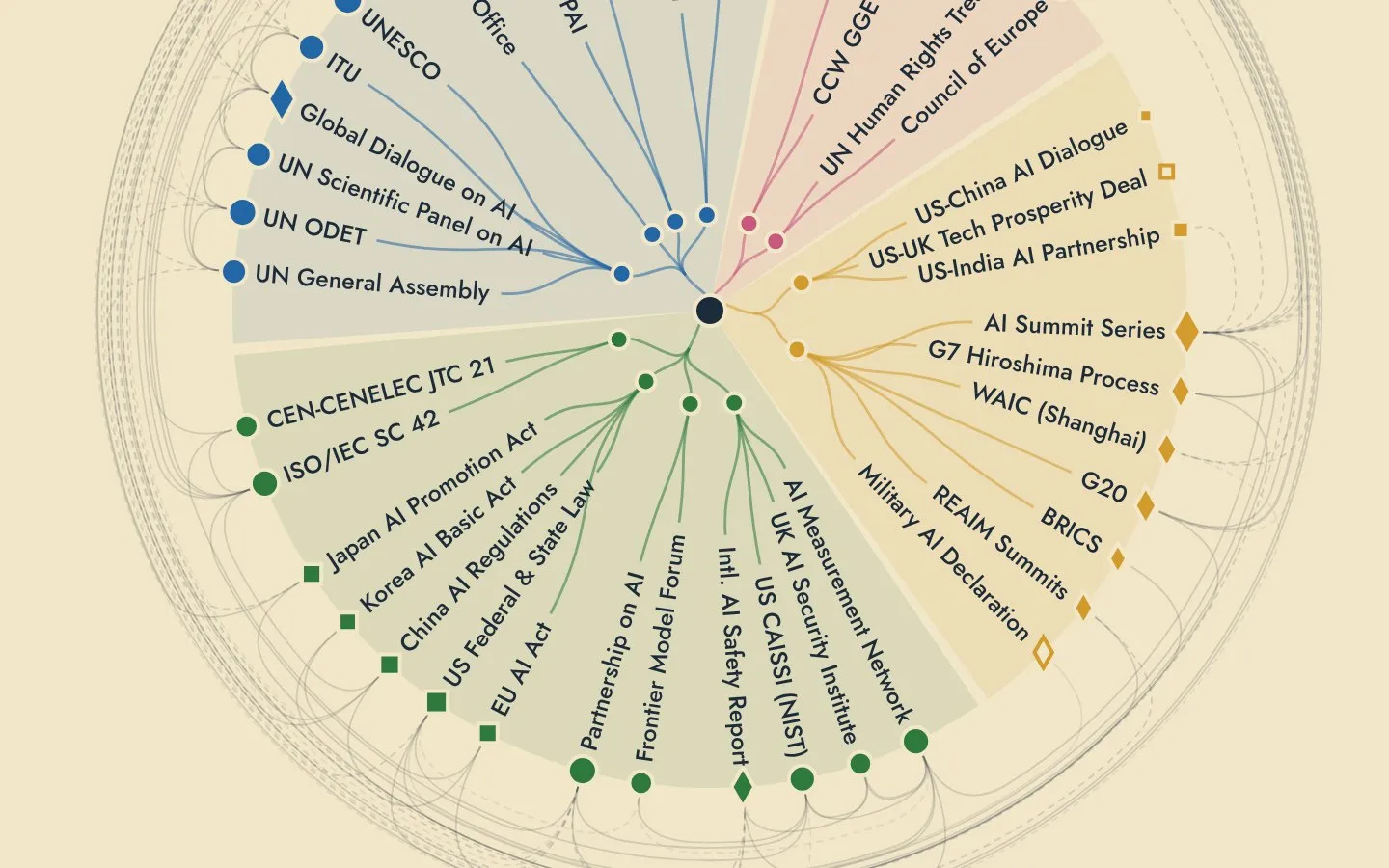
Most diagrams of international AI governance draw lines between bodies without saying what a line means. On this map, every line is a documented link: a source shows a specific relationship between two bodies, for example that one created or mandated the other. Two bodies that only work on the same topic get no line. Each link is marked formal or informal and names its kind.
What It Shows
38 bodies in four groups: international organizations, treaty sources, bilateral initiatives and processes, and customary law sources. Between them, 146 sourced links: 50 formal and 96 informal. Each body has a short profile with footnotes, and the map lists the links it looked for and did not find.
How It Was Made
AI research passes collected the profiles and links from public sources. Then separate AI passes opened each source again and checked each link and each profile fact; where a source did not support a fact, it was corrected or left out. I review the result. This is the same method as Ori: AI agents do the research, and a person checks it.
As of 24 October 2026
This is a snapshot, not a tracker. Bodies in this field change names, mandates and status within months. The map shows the field as its sources stood on 24 October 2026.